Shematria is a research tool for exploring the mathematics of the Bible.
Use our Calculator, Notariqon and Bible tools below, or cross-reference with one of our articles for advice.
We have articles on the Mathematics of Genesis 1-2, the Evening to Morning arrangement, and Genesis 1:1 and the Holy Name.
What is the evidence for Biblical Gematria? How can gematria can help us date the Bible? Our Top Ten Examples of Gematria
| 700 |
| Word | Translation & Meaning | Transliteration | Strongs/Verse |
|---|---|---|---|
| בראשית + אלהים + השמים + הארץ | This is the gematria of Genesis 1:1 using the pre-exilic biblical gematria cipher. See 800 for the notariqon. Biblical gematria only assigned numerical values to the noun type of words. | BRAShITh ALHIM HShMIM HARTs | Genesis 1:1 |
| Had + Manifestation + Nuit + 220 | From the Book of the Law 1:1; 'Had! The manifestation of Nuit!' 220 is the sub figura number of the Book of the Law. See 480 for more... | האד מאניפהסטאטיען נויט | Liber Al vel Legis 1:1 |
| ברוך שם שלמה המלך לעולם ועד | Blessed be the name of King Solomon ~ submitted by Reuben Levi | BRVK ShM ShLMH HMLK LOVLM VOD | 0 |
| מַלְאָכִֽי וְהִכֵּיתִ֥י הָאָ֖רֶץ חֵֽרֶם | Meaning: Malachi and strike the earth with a curse. From the last verse of the Tanakh. | MLAKI VHKIThI HARTs ChRM | Malachi 4:6 |
| ויטע אשל בבאר שבע שם בשם יהוה אל עולם | From Genesis 21-33 meaning: And he planted a tamarisk in Beersheba there in the name of YHVH AL HaOlam. | VITO AShL BBAR ShBO ShM BShM IHVH AL OVLM | Genesis 21:33 |
| מנסעף צק רשת אב | The letters between Lamed and Gimel. According to Rav Shmuel Baruch Ganot Shlita in the Gemara this is the reason why Lag Ba-omer is so named rather than being Gal Ba-omer | MNSOP TsQ RShTh AB | 0 |
| Nuit + Hadit + Ra Hoor Khuit | Meaning: Names of the Gods from the 3 chapters of Liber Al vel Legis. | נויט האדיט רא העער כהויט | Liber Al vel Legis 2:21 |
| Scarlet + Woman + Heart | See Liber AL vel Legis III:43. | סחארלהט ועמאן ההארט | Liber Al vel Legis 3:43 |
| I ever enterer | From 'The Cry of the Sixth Aethyr, The Vision & the Voice': 'Behold, I stand ever before the Eternal One in the sign of the Enterer.' | י הוהר הנטהרהר | The Vision and the Voice, The Cry of the 6th Aethyr, (pg 70) |
| עהטחע עבע רז החזסקט | Calculated with the reversal cipher. Meaning: The virgin + child + son + Immanuel. From Isaiah 7:14. | העלמה הרה בן עמנואל | Isaiah 7:14 |
| אברהם יצחק ישראל | Meaning: Abraham Isaac Israel | ABRHM ITsChQ IShRAL | 0 |
| יהוה אלהים + האדם + עפר - האדמה + ב נ חיים האדם נ חיה | From Genesis 2:7, meaning: YHVH Elohim + the Adam + dust - the ground + nostrils + neshamah + life + the Adam + the nephesh + living. Both words meaning 'neshamah' and 'nephesh' (which are understood as parts of the soul in Judaism) are mnemonics for the letter Nun. The word for 'nostrils' is a mnemonic for the letter Beth. | IHVH ALHIM + HADM + OPR - HADMH + B N ChIIM HADM N ChIH | Genesis 2:7 |
| trinc: the last oracle | This is the last line of the verses from 'Notes On the General characteristics of the Trumps' which concern the Chariot card, in the Book of Thoth and 'The Heart of the Master', by Aleister Crowley. | טרינח: תה לאסט עראחלה | Heart of the Master (1938) |
| יהו משה אלהים ר ואהרן נביאך | From Exodus 7:1. Note the use of the short name of God; YHW. Using gematria, we are able to spot scribal interpolations such as the changing of the original name to the later 4 lettered name of YHWH. The verse says: So said YHW to Moses, “See I have made you God to Pharaoh and Aaron your brother shall be your prophet." | IHV MShH ALHIM R VAHRN NBIAK | Exodus 7:1 |
| אברם עגלה ש ועז ש ואיל ש ותר | From Genesis 15:9 with the biblical gematria cipher. With the reversal cipher it is 1200. It reads And he said unto him Take me an heifer of three years old and a she goat of three years old and a ram of three years old and a turtledove and a young pigeon. A second calculation is derived from this verse following the directions from Genesis 15:10. See 800 for more. | HTsTO Ts SHN Ts SQKT Ts VGVZL | Genesis 15:9 |
| והארץ היתה תהו ובהו - וחשך + פני ב אלהים - אלהים + פני המים | From Genesis 1:2. Note, the word for the deep [תהום] has a set value of 0! | VHARTs HIThH ThHV VBHV - VChShK + PNI B ALHIM - ALHIM + PNI HMIM | Genesis 1:2 |
| ליהוה אלהים השמים ושמי השמים הארץ בה | Translation & Meaning?This is from Devarim (Deutronomy) 10:14: "Behold, to Yahweh Elohim the heavens, the sky, the heavens, the earth and all that is in it." This verse demonstrates how gematria can be used to identify and correct for scribal interpolation. The gematria of this verse is called attention to by the flagword "Behold" so we know the gematria of this verse is going to be significant to the lore of the Merkabah. The final letter Mem of אלהים (Elohim) was changed to a Kaph (Elohik) by a copyist. Such instances of scribal interpolation with אלהים / אֱלֹהֶ֔יךָ are common and should always be checked for by the gematraist. | LIHVH ALHIM HShMIM VShMI HShMIM HARTs BH | Deut 10:14 |
| ειρηνοποιοι ειρηνοποιοι ειρηνοποιοι αλ | This is from Matthew 5:9 which says "Blessed are the peacemakers, for they [the peacemakers] sons of God will be called." In the formal system of biblical mathematics, a blessing is to multiply by two, and the word for "they" αὐτοὶ indicates to use the name or word to which it refers to. The αλ is just a Greek transliteration of the Hebrew word אל which means 'God'. This gematria uses the reversal cipher. See 1480 for the total with the Greek biblical gematria cipher. | EIRHNOPOIOI EIRHNOPOIOI EIRHNOPOIOI AL | Matthew 5:9 |
| The sum total of the gematria and the notariqon of Ezekiel 1:1. See 400 and 300 for both components. | See 400 + 300. | See 400 & 300. | Ezekiel 1:1 |
| ι δ ε τ ι τ α μ ε η ε ι ο λ χ | Notariqon from Matthew 1:16, concerning the geneology of Jesus, with the reversal cipher. See 244 for the regular biblical cipher. | I D E T I T A M E H E I O L Ch | Matthew 1:16 |
| ι ι χ δ α δ ι τ ε θ π η κ ι χ τ κ | This is notariqon using the reversal cipher from Jude 1:1, which says: Jude of Jesus Christ servant brother and of James. To those in God the Father having been loved and in Jesus Christ having been called. | I I Ch D A D I T E Th P H K I Ch T K | Jude 1:1 |
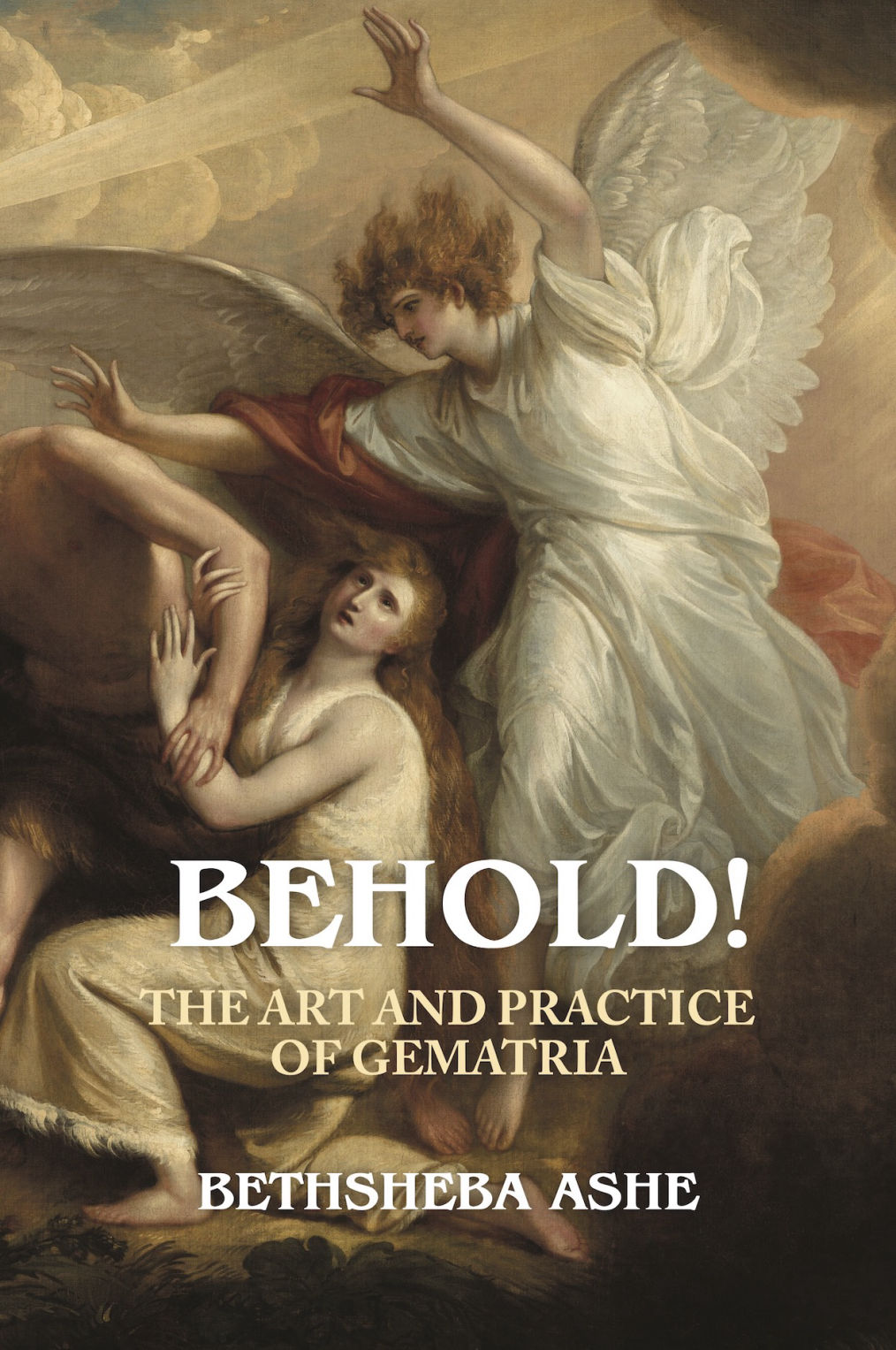
Behold! The Art and Practice of Gematria — by Bethsheba Ashe
Available from Amazon or Lulu.
‘A Kabalistic tour de force [...] perhaps the most valuable contribution to the study of modern qabalah in over a century.’ — Lon Milo DuQuette, author of The Chicken Qabalah of Rabbi Lamed Ben Clifford & The Tarot Architect
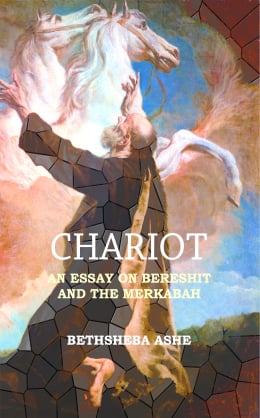
Chariot is a comprehensive exploration of the biblical text found in Genesis 1-2, focusing on their linear arrangement and uncovering the intricate mathematics embedded within these chapters. Ashe delves into the deeper meanings and connections within the text, providing insightful analysis and interpretations of Bereshit and the Merkabah, and fresh insight into the origin of the alphabet. This book offers readers a profound perspective on the ancient narratives, bridging the realms of theology and mathematics in a thought-provoking manner.
Memorize the correspondences to the letters, and then test your knowledge...
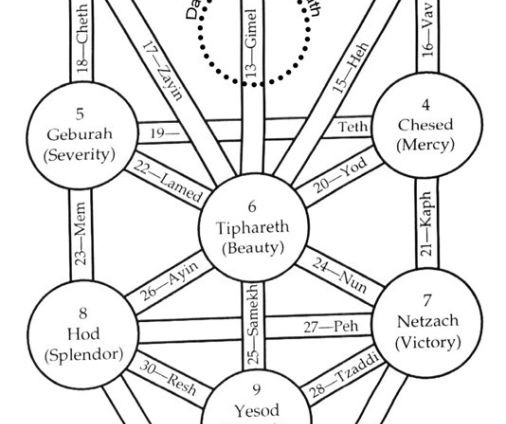
Test your memory of the hebrew letter correspondences for the Tree of Life...
Can you correspond the letters to their places on the Seven Palaces...?
In the late bronze age¹ and throughout the biblical period, the practice of Gematria was a formal system of mathematics. Gematria had strict rules and conventions that regulated how calculations were composed and read, just as our formal system of math does today.
You may ask how the ancient Hebrew speaking peoples accomplished this with only the alphabet? That's a great question because at that time there was no notation for arithmetic like +, -, ×, ÷ and this happened before the Arabic numbering system (0, 1, 2, 3, 4 etc) was invented².
In those ancient times all the letters of the alphabet represented numbers, and parts of speech were used to separate calculating values from calculating indicators. Nouns were used for their values, and some verbs and prepositions were reserved to indicate types of arithmetic. For example, to bless ברוך indicated a multiplication by 2, while to curse ארור meant to divide by 2.
“See for YHVH has given you the Sabbath upon that he gives you in the day the sixth bread for two days.” Exodus 16:29
Some nouns were restricted from the count, and these were called middot (measures). These were words like: day, week, year, name, word, shekel, and all types of weights and measures. Middot included some unusual words that we wouldn't think of as measures today, such as: sons, and daughters.
Another feature of the formal system was that some nouns had set values by convention, rather than representing the sum of their letters. These were usually words that were related to the pictorial origins and themes of the alphabet. For example, the letter Beth came from the pictogram of a house, and so the word בית meaning house has the set value of 2 like the Beth. Nun came from the pictogram of a snake, and so the word נחש (nachash) meaning snake has the set value of 50 like the letter. עיניים meaning eyes has the set value of 70 like the letter Ayin which came from the pictogram of an eye.
All these features meant that gematria in the Bible was a formal system of math that readers of the time knew how to decipher so that the exact calculations of biblical writers were understood by biblical readers.
In all ancient societies the practice of numeracy is acquired before literacy, often by a significant margin³, and before Hebrew letters were corresponded to phonetic sounds that could be recorded, they were numbers. The numbers of the alphabet were assigned to specific yet broad themes which corresponded to how the ancients perceived the ancient world. These themes were matters that were thought to be in the experience of all human beings like day, night, the sky, birth, death, etc. These were all arranged into a diagram, alternatively called the Seven Palaces or the Merkabah (Chariot), and this was used for correspondences. The Merkabah was made a restricted study by the Sages, so little mention of it was made in the Talmud. This restriction also covered the main ciphers used in the Bible, with the exception of the Standard Cipher (Mispar Hechrechi).
GEMARA: The Gemara poses a question: You said in the first
clause of the mishna: Nor may one expound the Design of the
Divine Chariot by oneself, which indicates that the topic may not
be learned at all, and yet you subsequently said: Unless he is wise
and understands most things on his own, which indicates that an
individual is permitted to study the Design of the Divine Chariot.
The Gemara explains: This is what the mishna is saying: One may
not expound the topic of forbidden sexual relations before three
students, nor the act of Creation before two, nor may one teach the
Divine Chariot to one, unless that student was wise and understands on his own.
- Chagigah 11b:8–9, The William Davidson Talmud.
The ancients would have just called their system of math מנה (manah) which means to count. The word Gematria was borrowed from the Greek word meaning geometry, as in practical terms this meant land measurement and it was probably intended to refer to mathematics.
"The ancient rabbis were well aware of this use of geometry. It is to it that, in Pirkei Avot or “The Ethics of the Fathers,” Rabbi Eliezer Hisma was referring when he said, “Tekufot [calendrical reckoning] and gimatriya’ot [geometrical algebra] are side dishes to wisdom.” Gematria thus came to mean the algebraic solution of mathematical problems, and eventually, simple arithmetic and the calculation of the numerical values of Hebrew words. This is the sense in which it entered Jewish tradition, in which both it and the technique it designates are still widely encountered today." - Philologos (The Forward, 2013).
The Gematria ciphers for the Hebrew Bible were transposed to the Greek alphabet by Jewish converts to Christianity and they were used in the New Testament. Soon afterwards, the New Testament cipher was lost by Christian Churches, to the detriment of general biblical exegesis.
In 1900 the Biblical Ciphers were re-discovered by Aleister Crowley, who transliterated them to our modern alphabet and used them in Liber Al vel Legis and other of his Class A texts. Aleister used his knowledge of the Merkabah and the biblical ciphers as the architecture behind the Qabalah of Thelema.
In 2015 the biblical ciphers were rediscovered by the Noachide and Thelemite cryptographer Bethsheba Ashe, the creator of this calculator, and she spent the years following deciphering the ancient hebrew formal system using scientific method. She has presented the results of several years of biblical decipherment in her guide to the study of gematria throughout the ages: 'Behold! The Art and Practice of Gematria.'
[1.] The oldest example of gematria is in the Mt. Ebal Curse tablet.
ASHE, B. (2023). Behold: The art and practice of gematria. pg 21-22.
[2.] The History of Mathematical Symbols: https://encyclopediaofmath.org/wiki/Mathematical_symbols
[3.] Overmann, K. A. (2023). The materiality of numbers: Emergence and elaboration from prehistory to present. Cambridge University Press.
Shematria is a Gematria Calculator for people engaged in the study of Hebrew and Greek Biblical Scripture.
Shematria converts words to numbers. It makes working out formal gematria calculations easier and faster to do. Shematria accepts calculations in Hebrew, Greek, Arabic & Roman scripts. The calculator only carries ciphers that have been proven to have been used in the Tanakh, the New Testament, the Talmud, or the Book of the Law*.
The Genesis Order cipher is generally used in conjunction with alphabetic acrostics in the Bible (see 777 for the gematria of the 'virtuous wife'). The first two chapters of Genesis are keyed to this cipher.
The Biblical Gematria cipher is the most widely employed gematria cipher in the Bible.
The Reversal Cipher applies the Biblical Gematria cipher values to the letters in the reverse order.
The Standard Hebrew cipher is Mispar Hekhreḥi, and it is chiefly used in Talmudic and Kabbalistic texts.
The name 'Shematria' is a contraction of the words 'Shem' and 'Gematria'. in Hebrew the word 'Shem' means 'name'. The word 'Shematria' has the same gematria value as the word 'Gematria'. A common title for God in Judaism is 'HaShem', meaning 'The Name' (of God). This calculator allows you to add + and subtract - as well as do simple division / and multiplication * (with single letters).
The Gematria Calculator will not count any numbers that you enter if they accompany letters. If you enter numbers only, it will check our database for other examples of words and calculations that match that number.
The Shematria database is curated. Please see our guidelines for submission to our database. The Gematria Bible includes the standard gematria of each word, and it can speak the verses in Hebrew or Greek for you to reveal poetic meter, rhyme, and other features of the text.
To learn more about the formal system of Gematria used in the Bible, please see Behold! The Art and Practice of Gematria by Bethsheba Ashe, on Amazon, Lulu or Barnes & Noble. Also by Bethsheba Ashe — To learn more about Aleister Crowley's gematria, please see 'The Hermeneutics of Aleister Crowley', freely available as a PDF (see above for link).
——————————
* With the exception of the experimental Arabic cipher.
Please SHARE this PAGE!